Why People Hate Charlotte Mason Education & What To Do Instead
What do bookstagram/book-tok, Charlotte Mason-inspired education, and cultural studies have to do with each other? They may actually have a few points of intersection but today I want to discuss one: How recognizing you and your child’s freedom in study—including cross-cultural relationships or anthropology—revolutionizes your education experience and release you from unattainable expectations.
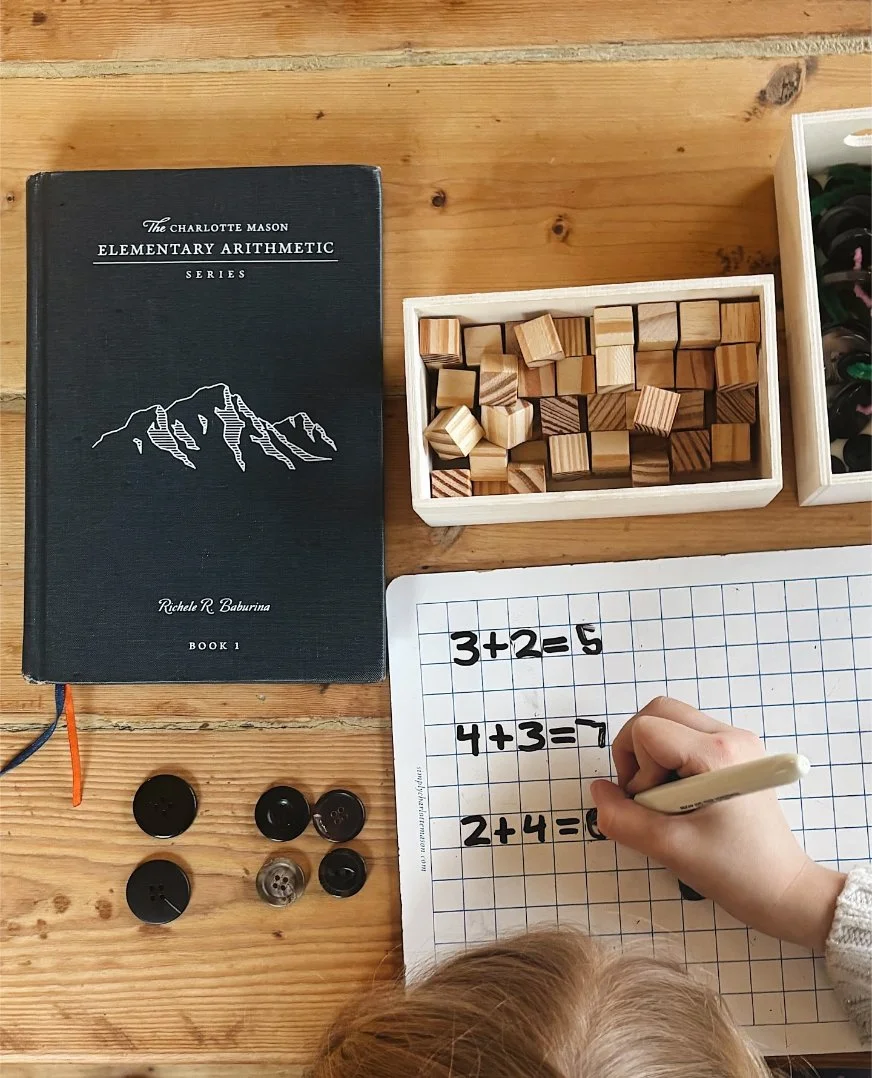
Recently, I’ve seen a lot of criticism towards Charlotte Mason education. Much of this is by parents who are justifiably frustrated by their negative experiences. The story is often the same. Parents are lured in by lovely flat lays on instagram, beautiful stories and illustrations, and the idealism of nature walks in Tik-tok and learning the “hard subjects” more organically (ie less textbook).
It sounds and especially looks amazing. So they join the local “Charlotte Mason community” and jump in with both feet.
Only, before they know it, they’re drowning.
How do I use any math curricula if we don’t start until the child is seven?
Is my child falling behind?
How do you fit in nature walks with all this reading?
Surely, there must be more spelling work.
How do I teach things I’m not good at?
Handicrafts?!
You want me to read all HOW MANY volumes of Mason’s writings?
And the topic around which battles have been fought:
Twaddle.
Suddenly, this romantic notion surrounding a “Charlotte Mason education” has vanished, replaced with an impossible standard to which they’ll never measure up.
Stop.
Hold. The. Phone.
The problem lies in one distinction: A parent deciding how to educate their child is not required to take religious orders.
Whether they’re choosing a school (which admittedly comes with some amount of commitment to a process) or a homeschool curriculum, a parent does not have to reject the abundance of educational materials, advice and methods that don’t fall under a certain banner.
Education is not the sole purpose of life; it is to expand the goodness of life that is already ours.
Humans learn and connect through story; education can make us better storytellers and hearers.
Mankind has a uniquely creative nature; education can help us hone both our skills and our appreciation.
We’re all uniquely born persons; education can bring out the best in us.
Every person is a citizen of some nation; education can make each of us a better one.
The thing is, education for the sake of education (or lesser values) can make a person pompous, unoriginal, irrelevant, self-serving and a host of other unfortunate qualities.
This is a natural result of a non-religious legalism that surrounds many educational methods. Ticking a tidy, uniform set of boxes will put the learner in a tidy, uniform box—like a clone. Though entities have done and do so, this should never be the goal in education.
Within the Charlotte Mason community, I think (at least, I choose to believe) that this the purist rigidity began with well-meant passion for something good—for an educational process that made more of students, not less and that served to add to life, rather than dump un-relatable information into the mind where connected understanding could be.
Though I’m not closed-minded enough to say Charlotte Mason’s methods are perfect for everyone, I do think she had valuable wisdom in raising and education children. But it’s all useless if people start claiming that there’s only one right way to do it.
Charlotte Mason herself wrote frequently about children being “born persons” and not a shapeless lump of clay. Any kind of rigidity around her educational methodology essentially excludes the so-called purist from the Charlotte Mason camp. The whole point is to “spread a feast” as they say so that children with individual passions, learning strengths and weaknesses, and personalities can find the nourishment they need to become lifelong learners.
We have used one of the most well-known “Charlotte Mason” curricula for about ten years. And with a decade of experience, I find that rather than attaining some magical ability to follow the plan to a T (which is not usually the curriculum writers’/compilers’ intent anyways), I use less and less of the scheduled readings. This is the way it should be. The grand lists and schedules are resources for educators who are busy or just beginning and need options to choose from, not recipes for the perfect student.
Anthropology. (Or diesel mechanics or nuclear fission…-pick your passion.)
Cultural studies.
History books from our heritage that aren’t prescribed in Canadian, USA or UK book lists.
Spiritual growth books that don’t align with the compiler’s religious beliefs.
As a parent and/or educator, we have the freedom to develop a learning experience that serves to amplify life for the child.
Even in a school setting, there is often flexibility within the scope and sequence to meet the child where their eyes light up, or switch their grammar practice for one that clicks.
For example, the curriculum we use leans toward fairly reformed Christian theology. I want my children to understand where people are coming from who hold to those doctrines. I also want them to understand that there are Christian who believe differently. And, for our family, a systematic theology is basically useless unless it helps us love others like Christ did.
This year, we wanted to provide our fifteen year old with more resources to help him live out his faith. (Please note: I’m a huge proponent of giving kids space to work out their own faith, including disagreeing with us, doubting and grace for failures and differences. This is where he is at, not where he is required to be.) So we replaced the spiritual formation books prescribed in our reading schedule with three different views on sharing one’s faith.
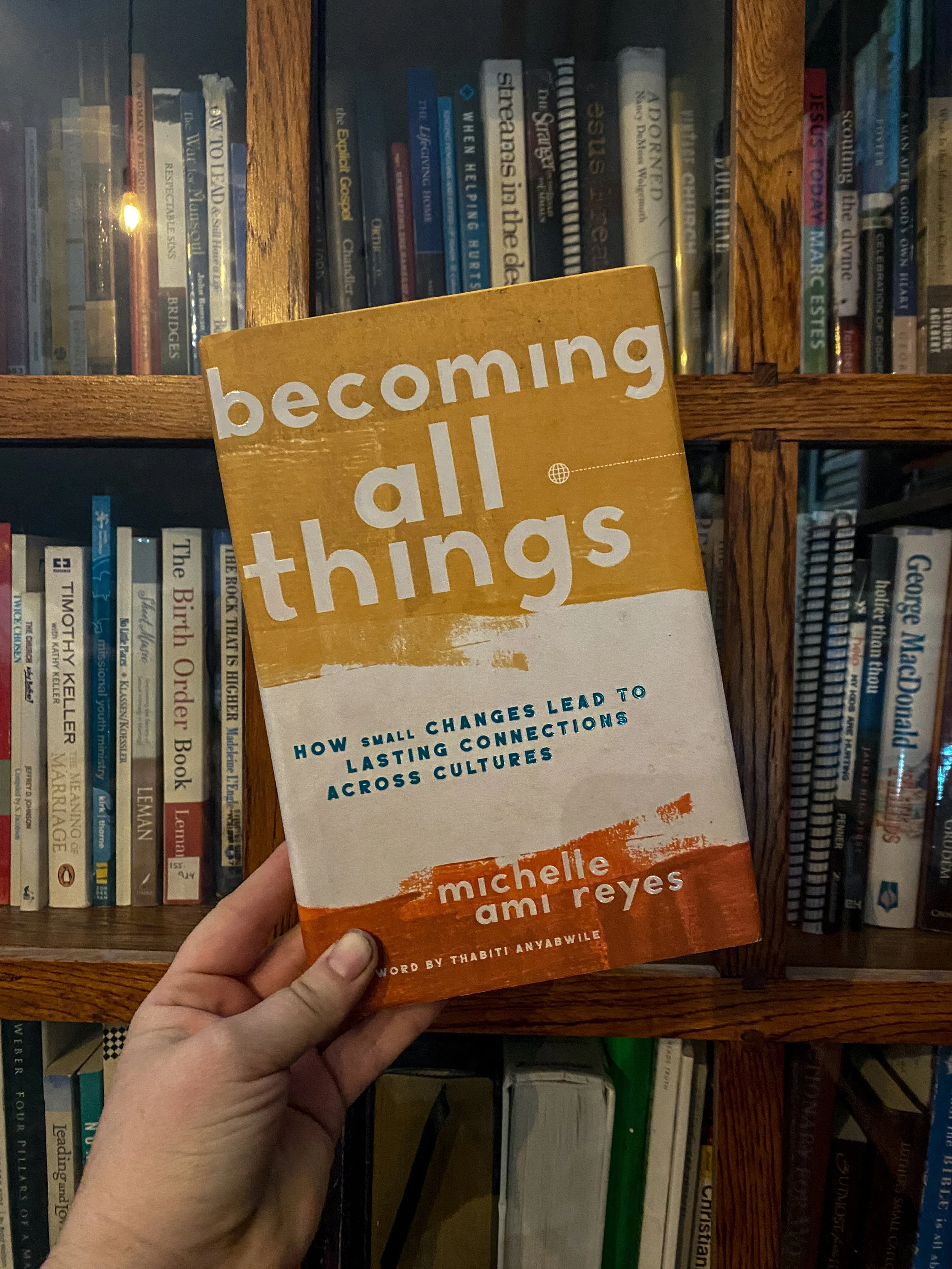
We chose Saturate by Jeff Van Der Steldt, Speaking Jesus by J. Mack Styles and Becoming All Things by Michelle Ami Reyes. While they all lean towards developing a relationship with someone rather than preaching at relative strangers, each had a different angle. Our son can see that there are many ways to share the hope he has with others, and take the tools that suit him.
In our family, we are people-people, even the introverts among us. It’s part of our family culture. We love languages, and learning about people who are different from us. That exploratory nature (along with loudness, humor, the inability to just say good-bye and a love of a good time) is part of our cultural background. But how could any one booklist meet those unique needs?
No curriculum can account for the unique combination of our cultural background, our immediate family’s values and our location/station in life, much less the personality and passions of each child. It’s up to parents and educators to use our free-will and creative minds to make the best of the endless options before us.
It is tempting to demand large-scale adaptations to curricula or to throw out plan after plan in search of the perfect reading schedule. But that will nearly always lead to vexation rather than solutions. (And please know that I am completely inspired, not critical toward those who are adapting reading plans for cultures outside the Anglo-Saxon narrative. I see those people as the front-runners for what I’m about to say.)
The change starts when we shift perspectives. We must stop asking questions like, “What would Charlotte Mason do?” and ask “What will serve this child best?” And then we have the privilege of curating their learning experience.
This is the point. The parents who were wooed by beautiful flat lays of watercolor illustrations and aesthetic bookstagram posts of canvas-bound books can have the homeschool life they dream of if they remember they have the freedom to choose it.
In closing, here are things I’ve done to tailor the learning experience of students, both my children and at a cottage school I taught at.
Skip school. Seriously. If there’s a good reason, we just call the whole thing off. In order for this to work with the types of books we read (you can’t often just skip chapters 16 and 23 and expect to have a good understanding by the end) we divide “must have” subjects and skippable subjects. As long as they do those must-haves at some point in the week, we can take a hike, go kayaking, or visit with friends we’ve been missing. This is also allows for occasional interruptions to serve others.
I’ve traded out additional history readings that follow the Anglo-Saxon->North American focus for books from the student’s cultural background. I cannot encourage this enough. It often ignites a new love for history and new kind of understanding of the child’s family background. (It could be as simple as Oh, my mom loves a very tidy house because the women in her Germanic background have been prioritizing that for years! Or as complicated as, I wonder if I have a hard time expressing myself verbally in a way people relate to because my parents learned English from their parents who were beat for speaking their native language.)
Like I said, we love a good time. So rather than pretend that’s not so and have my children turn into party animals when they need an outlet for this trait, we’ve shown them ways to have good clean fun. We throw dances and parties where people aren’t getting smashed, where preschoolers learn the steps by dancing with their grandpa. While it seems to me like everyone should do this, I know this is a major value of our cultural background. It’s evidences by the fact that our most dedicated attendees share a cultural background with us.
Composer study is limited to putting on classical music occasionally while we study and telling my children who the composer is. I thought we do more, because if grew up playing. I know all of the good reasons to spend time wappreciating classical music. But it doesn’t feed their passion for music. An Irish trad session in the other hand… Apply this to whichever subject is killing your child’s love for beautiful things.
We also put the brakes on classical music training. I got out all the instruments we own and put them in one corner, plus acquired a few more. I placed cord/key charts and learning books in a basket nearby. That’s it. And my house is full of music. It helps that my husband and I are both musicians, so we can answer questions or give gentle tips, but that need not be an obstacle when there are books, apps, videos and lessons or tips in any format.
Learn with them. Though I’ve played several instruments and sung in choirs since the fourth grade, I’d never played any fretless strings (not counting piano of course) until a couple years ago. I started getting a hand-me-down violin out during Christmas break. I’d put it back shortly after we started school again. Then last year, I kept it out. I started learning simple jigs and reels. My children heard me scratch and screech and then scratch less and then growl when my fingers didn’t cooperate or I can’t get the bow angle right. And then they hear a reel they recognize and the Christmas songs start to sound alright and what five days of consecutive practice will do to with a difficult measure in a jig. This translates to any and every subject. Ineptitude (and subsequent growth) in music just happens to be very evident. :)
Trade science books out for ones that excite them. Beyond a basic understanding, don’t feel pressured for your children to have a deep understanding of all the sciences. If you teach them to enjoy learning, they will be able to learn anything they need for their future.